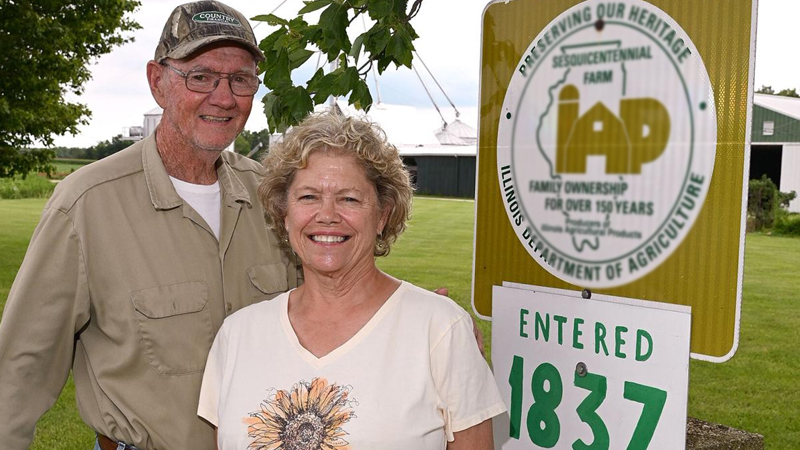
“That’s the way the dice were rolled” farmer says as 188 year family farm faces collapse (Tribune-Star/Joseph C. Garza)
Don Guinnip is still working the land the way his father and grandfather did before him, but he knows the clock is running out.
At 74, Joseph Guinnip starts his mornings early, managing roughly 1,000 acres of corn and soybeans along with 40 cattle. But decades of physical labor have caught up to him. A battle with prostate cancer and two titanium hip replacements have made the job harder, and he estimates he can keep up his current workload for only a couple more years.
Inside his farmhouse, surrounded by black-and-white family photos, Guinnip recently gathered his four siblings to discuss what happens next. The conversation was not just about money or property. It was about the possibility that the Guinnip family name may no longer be tied to the land that stretches along Guinnip Road.
The most obvious successor would have been his children, but both chose different lives. His son and daughter went to college and now work corporate jobs. His siblings made similar choices decades earlier, leaving Don as the only one to stay behind and keep the farm alive.
“It’s disappointing to me,” Guinnip says, holding back tears. “That’s the way the dice were rolled, and you have to accept what life gives you.” His situation reflects a broader crisis in American agriculture.
While the number of farmers has been shrinking for years, rising costs and weak commodity prices are accelerating the decline. U.S. court data shows 315 farms filed for bankruptcy in 2025, a 46% jump from 2024.
Farmers are also ageing rapidly. According to the U.S. Department of Agriculture, there are now more farmers aged 75 and older than those under 35. “Family agriculture is in crisis, and American farmers and ranchers are fighting for their livelihoods,” says National Farmers Union President Rob Larew.
Many farmers have been forced to rely on government support to survive. Congress approved $10 billion in bailout funds in 2024, along with $21 billion in natural disaster relief. The Trump administration’s trade policies added more strain, prompting the White House to pledge another $12 billion in aid in December. Even so, industry estimates suggest corn growers will likely remain in the red again in 2026.
Guinnip’s farm has been in the family since 1837, passed down through generations. But its future is complicated by a trust set up by his parents, which splits ownership equally between Don and his four siblings. Don runs the farm, but each year he pays his siblings rent based on performance.
He keeps costs low by living in a century-old home and driving a 1990s-era truck. He still uses aging equipment rather than buying new machinery. “Why would I buy new equipment if I have no one to pass it along to?” he says.
During the family meeting, the siblings debated options, from dividing the land among their children to reorganising the farm into an LLC or leasing it to another farmer. But after two hours, no major decision was made.
Guinnip listened quietly before admitting what everyone already feared. “I’m healthy, I like doing what I’m doing,” he says. “But I’m not going to live forever.” For now, the farm continues. But the future of Guinnip Road remains uncertain.
READ NEXT
“What the f— is that I just said?” as HGTV Fires “Rehab Addict” Host After Racist Slur Video